Team product · Motkan Labs
Clipaf
Social publishing meets an AI media studio
- Role
- Full-Stack AI Engineer
- When
- 2026
Overview
A multi-client workspace where agencies plan, approve and publish to Instagram, Facebook, TikTok, LinkedIn, X and YouTube — growing into an AI platform that generates on-brand images, video, voice and music in the same place.
Clipaf is built by the Motkan Labs team. Below is the work I owned end to end.
What I built
- 01
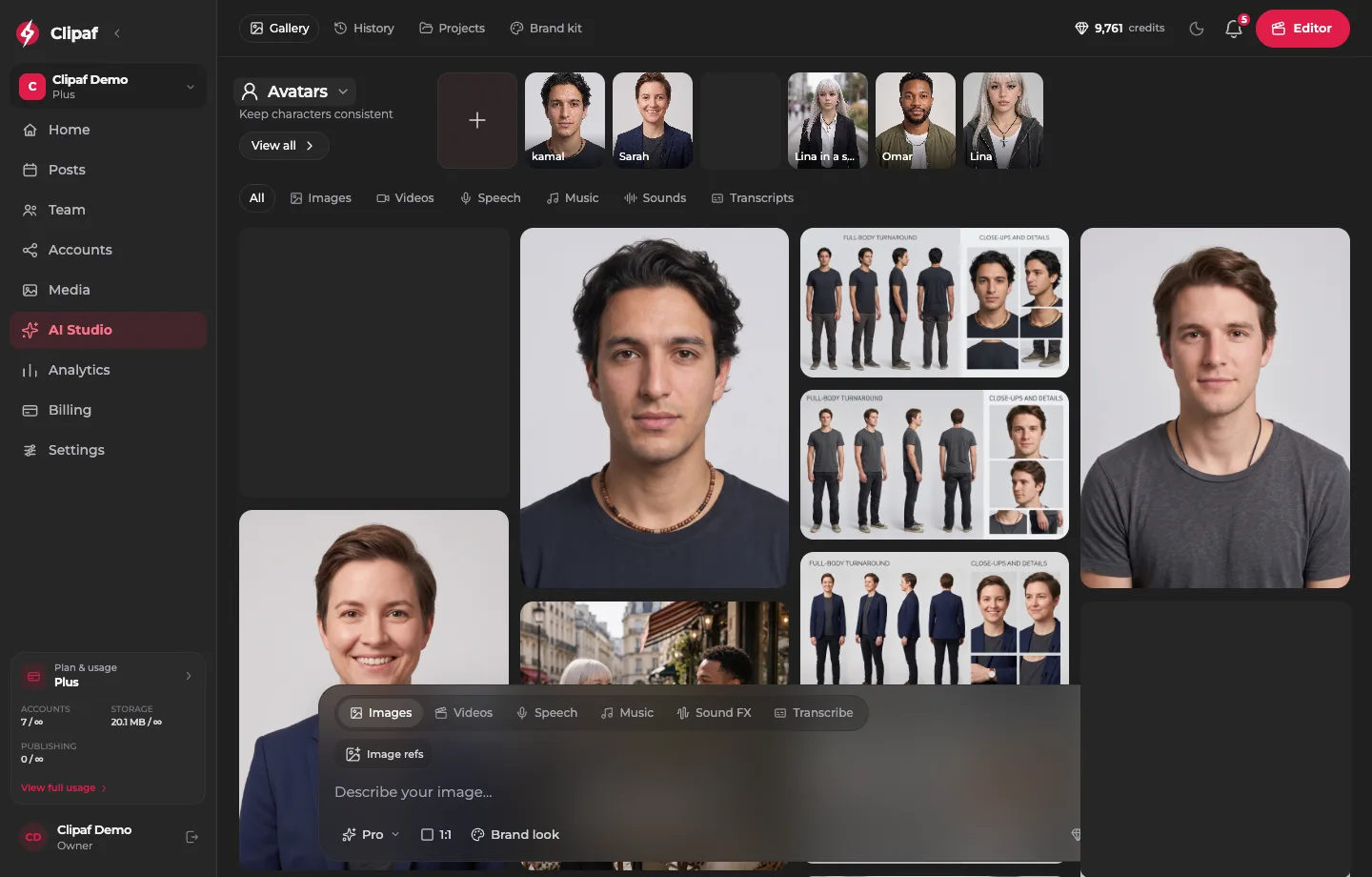
A unified AI Studio — one page to generate images, video, voice, music, sound effects and transcriptions, with a masonry gallery, history and a floating multi-mode composer, backed by credit-metered jobs across fal.ai, Higgsfield, Gemini, ElevenLabs, Fish Audio and Deepgram.
- 02
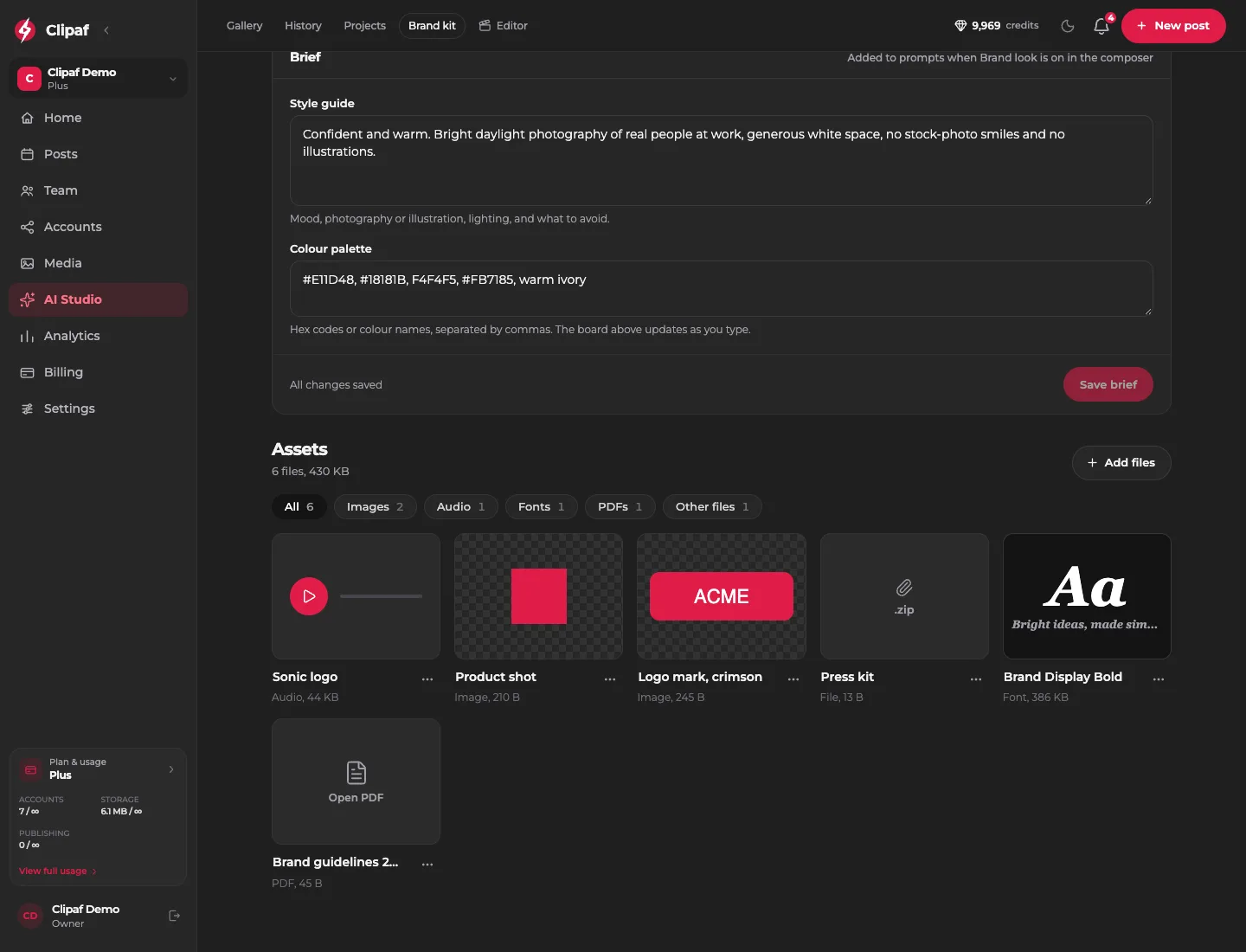
Brand Kit and asset library — live palette swatches, a style guide previewed in the uploaded brand font, and a typed asset library with byte-level file detection and sandboxed SVG serving.
- 03
@mentions in prompts — reference a brand logo, palette, style guide or asset and it becomes a real model reference, not pasted text.
- 04
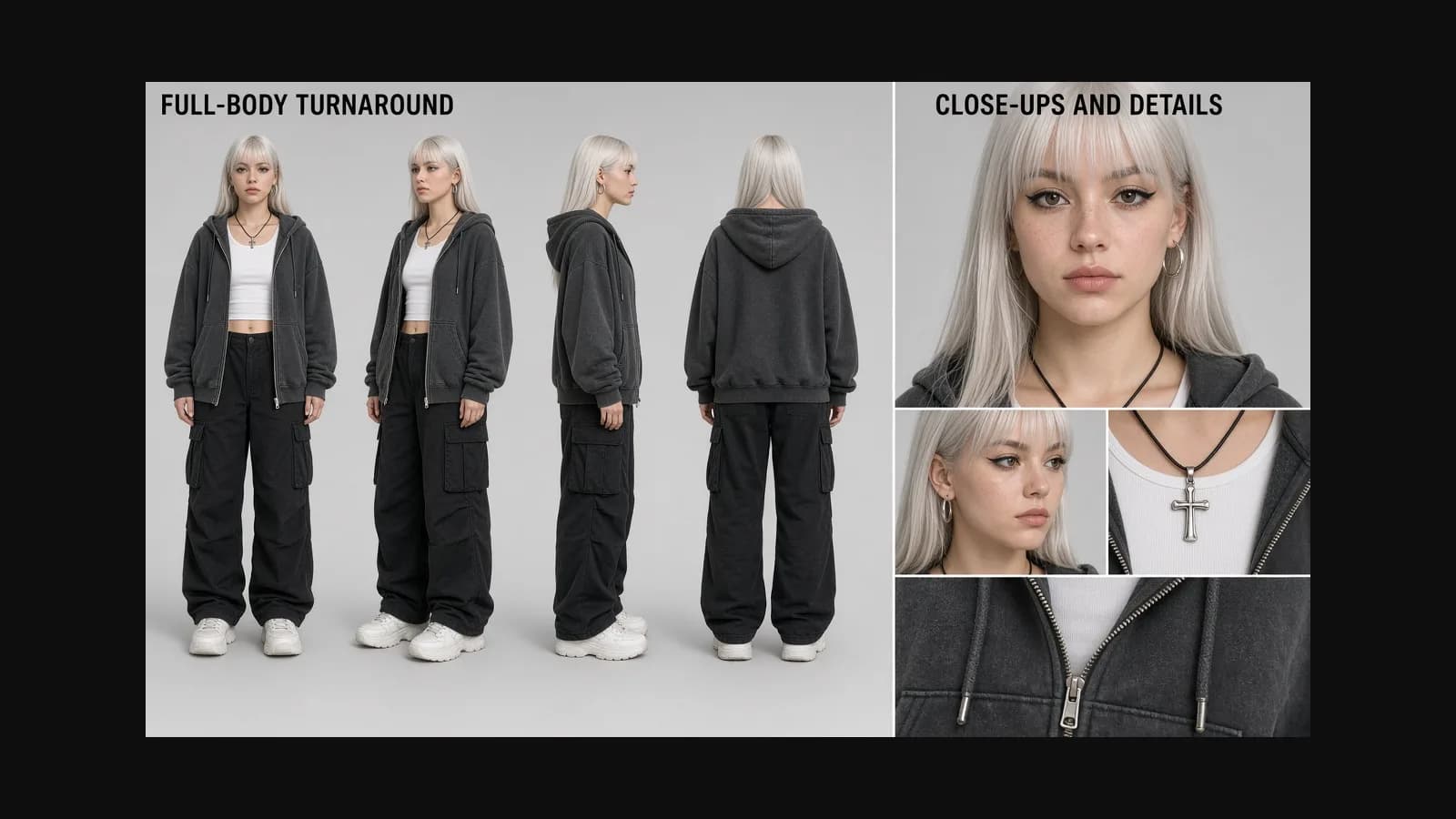
An AI avatar designer that generates a 16:9 character sheet and a matching portrait, keeping faces consistent across scenes with up to four tagged avatars per generation.
- 05
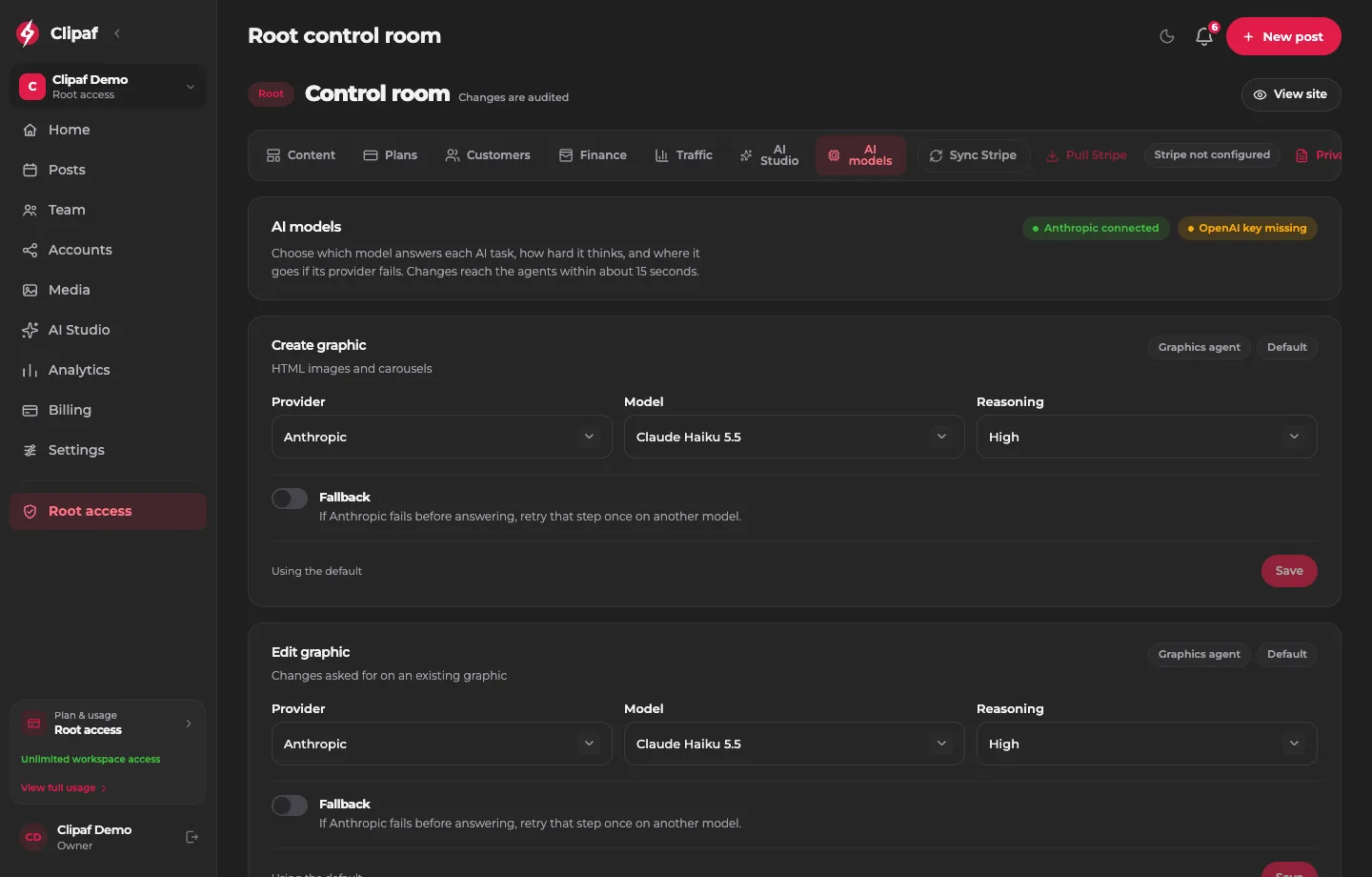
A root AI-model control room — per-task provider, model, reasoning effort and fallback, audited and hot-applied to the agents within about 15 seconds. I also moved the studio agents to Claude Haiku.
Highlights
4.5× faster character sheets
Moving the avatar pipeline to Nano Banana 2.1's edit endpoint cut character-sheet generation from 145 s to 32 s at 2K resolution, and held identity far better than the previous model.
Fallbacks that never double-bill
A fallback model retries a step only when the provider fails before producing any output — never mid-stream or on a bad request. Repeated requests attach to the in-flight job and retries replay at the original price.
Screens